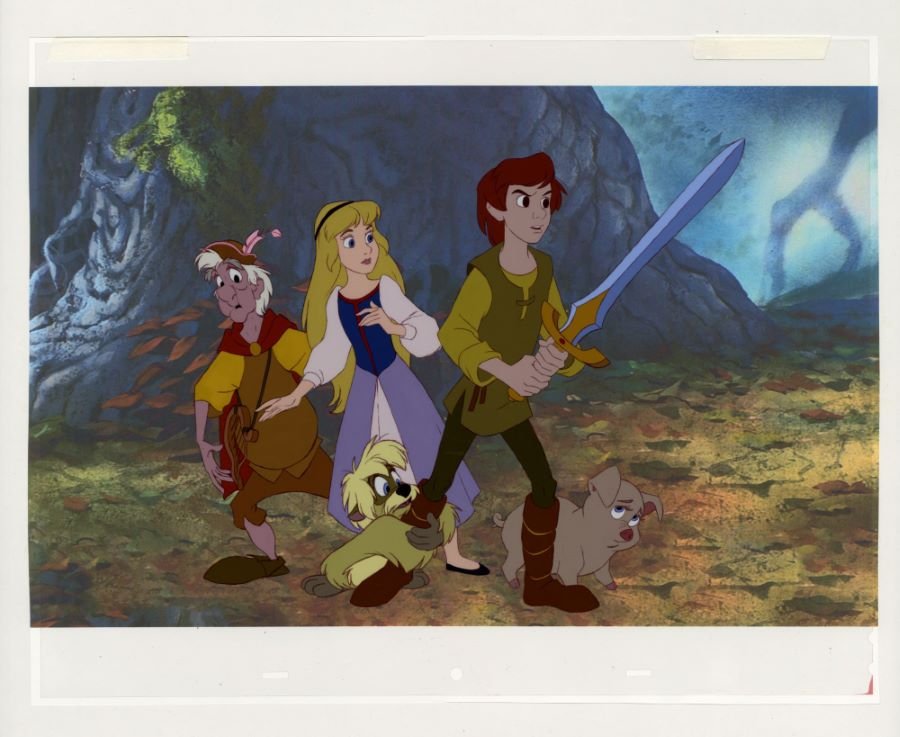
The rich tapestry of heroic journeys often finds its deepest threads woven through the relationships characters forge. In Lloyd Alexander's The Black Cauldron, the second installment of "The Chronicles of Prydain," Character Relationships and Dynamics in The Black Cauldron don't just add flavor—they are the crucible in which Taran, the Assistant Pig-Keeper, is forged into a true hero. This isn't just a tale of magic and monsters; it's a profound exploration of how companionship, mentorship, and even conflict sculpt identity and drive courageous acts.
From the first reluctant alliance to the ultimate sacrifice, the bonds between Taran and his diverse companions—and his clashes with formidable foes—are pivotal. They illustrate Alexander's masterful ability to use interaction as a catalyst for growth, revealing that heroism isn't a solitary pursuit but a shared endeavor, built on trust, loyalty, and mutual respect.
At a Glance: How Relationships Shape The Black Cauldron's Heroes
- Growth Through Interaction: Taran's journey from naive boy to responsible leader is directly fueled by his relationships, particularly with Eilonwy, Gurgi, and Gwydion.
- Diverse Mentorship: Dallben and Gwydion offer different forms of guidance, showing Taran varied facets of wisdom and heroism.
- Loyalty and Sacrifice: The deep bonds among the companions inspire selfless acts, demonstrating the true cost and reward of friendship.
- Defining Good vs. Evil: The stark opposition between Taran and the Horned King solidifies the novel's central themes of integrity against tyranny.
- Identity Forged in Community: Taran finds his true self not in isolation, but in his commitment to and reliance on his fellow adventurers.
More Than a Quest: The Heart of Prydain's Story
The Black Cauldron plunges readers into a darker, more perilous Prydain than its predecessor. Taran, still longing for grand adventures and a heroic destiny, quickly learns that heroism is far more complicated—and often far less glamorous—than he imagined. This quest to destroy the evil Black Cauldron, used by the malevolent Horned King to raise an army of the undead, forces Taran and his companions to confront their deepest fears, make difficult choices, and above all, rely on each other.
Lloyd Alexander's elegant, accessible style, deeply rooted in Welsh mythology, creates a world that feels both ancient and intimately human. He doesn't just tell a story; he invites you into a journey where every encounter, every shared laugh, and every whispered fear builds the characters and their world. It's within these interactions that the novel truly shines, illustrating how relationships become the very backbone of a hero's development and the unfolding narrative.
The Bonds That Build a Hero: Taran's Evolving Relationships
Taran begins as an impulsive, somewhat self-absorbed youth, convinced that true heroism lies in glorious deeds and noble lineage. Yet, his most profound lessons don't come from ancient texts or magical visions; they come from the people—and creatures—he meets along the road. Each relationship he forms acts as a mirror, reflecting his flaws, highlighting his strengths, and guiding him towards humility and genuine leadership.
Taran and Eilonwy: A Partnership Forged in Fire
The dynamic between Taran and Princess Eilonwy is arguably the most central to Taran's emotional growth. Their initial interactions are often marked by bickering and playful jabs, a classic "will they, won't they" that quickly matures into something far deeper. Eilonwy, with her spirited independence, quick wit, and practical magic, challenges Taran's sometimes rigid worldview. She isn't just a damsel in distress; she's a co-adventurer, a peer, and often, the one who sparks innovative solutions.
Eilonwy teaches Taran the value of emotional intelligence, reminding him that bravery isn't always about charging headlong into danger, but also about cleverness and empathy. Their bond evolves into one of profound trust and mutual respect, demonstrating that true partnership means recognizing and celebrating each other's strengths. This evolving connection between Taran and the resourceful Princess Eilonwy is a powerful illustration of how individuals grow together, shaping each other's paths through shared trials and triumphs.
Taran and Gurgi: The Heart of Loyalty
Gurgi, the shaggy, human-animal hybrid, is initially presented as a cowardly, food-obsessed creature. However, his relationship with Taran becomes one of the novel's most touching examples of unwavering loyalty and selfless love. Taran, despite his initial irritation, consistently shows Gurgi kindness and patience, nurturing a deep devotion in the creature.
Gurgi, in turn, offers Taran unconditional support and, eventually, immense courage. His willingness to sacrifice himself for Taran and their friends is a pivotal moment, teaching Taran that true heroism can emerge from the most unexpected places and that the value of a life is not determined by appearance or social standing. This bond underscores Alexander's theme that compassion and acceptance can transform fear into fierce devotion.
Taran and Fflewddur Fflam: Camaraderie and Humility
Fflewddur Fflam, the wandering bard with his magical harp, brings a much-needed lightness to the grim quest. His tall tales, which are always "mostly true" and cause his harp strings to break, provide comic relief, but his underlying courage and good heart are undeniable. With Fflewddur, Taran experiences the joy of shared camaraderie, learning that even in the gravest circumstances, there is room for humor and steadfast companionship.
Fflewddur's humble nature and willingness to admit his exaggerations, despite his boastful front, offer Taran another perspective on honesty and self-acceptance. He's a reminder that genuine bravery doesn't require perfection or grand pronouncements, but rather a willingness to show up and do what's right, even when afraid.
Taran and Dallben: The Roots of Wisdom
Though physically absent for much of the quest, Dallben's influence on Taran is profound. As Taran's mentor and guardian, the ancient enchanter provides the philosophical foundation for Taran's journey. Dallben's wisdom, patience, and deep understanding of Prydain’s history and magic serve as Taran's moral compass.
Taran's quest is, in many ways, an extension of Dallben's teachings—a practical application of the lessons he's absorbed at Caer Dallben. His memories of Dallben's guidance help him navigate ethical dilemmas and understand the broader implications of his actions, solidifying a deep, abiding respect for his mentor.
Taran and Prince Gwydion: The Ideal of Heroism
Prince Gwydion, the noble warrior from the kingdom of Don, represents the archetypal hero Taran initially aspires to be. Gwydion's strength, skill, and regal bearing offer Taran a direct example of leadership and combat prowess. He acts as a more direct, active mentor during parts of the quest, guiding Taran in battle and strategic thinking.
Gwydion's presence inspires Taran, providing a tangible model for the kind of hero he could become. Yet, it's Gwydion's humility and his willingness to treat Taran as an equal, despite their disparate backgrounds, that truly impresses Taran and further shapes his understanding of true heroism. It’s a powerful lesson that nobility of spirit often outshines nobility of birth.
The Shadows That Define: Taran's Opposition and Unconventional Allies
A hero's journey is as much defined by the obstacles they overcome as by the alliances they form. For Taran, the terrifying presence of the Horned King and the enigmatic nature of the three enchantresses force him to confront darkness and mystery, further refining his character.
Taran and The Horned King: The Clash of Ideals
The relationship between Taran and the Horned King is one of absolute opposition. The Horned King embodies pure malevolence, power-hunger, and a desire to extinguish life, using the Black Cauldron for his sinister purposes. He is a stark contrast to everything Taran and his companions represent: hope, loyalty, and self-sacrifice.
This direct conflict serves as the central external struggle, providing Taran with a clear enemy against which to define his values. The Horned King's cruelty highlights the importance of the virtues Taran is learning, solidifying his commitment to fighting for good. The final confrontation isn't just a battle of strength, but a clash of irreconcilable worldviews, where Taran's growing understanding of human connection stands against the Horned King's desolate ambition.
Taran and The Enchantresses (Orddu, Orwen, Orgoch): The Labyrinth of Wisdom
The three eccentric enchantresses who guard the Black Cauldron—Orddu, Orwen, and Orgoch—present a different kind of challenge. Their interactions with Taran and the others are steeped in riddles, cryptic pronouncements, and a peculiar sense of morality. They are neither wholly good nor evil, but guardians of ancient power and knowledge.
These encounters force Taran to think critically, to discern truth from illusion, and to understand that not all wisdom comes in a straightforward package. They represent the ambiguous, mystical side of Prydain, demonstrating that the path to a solution isn't always clear-cut and sometimes requires unconventional thinking and a willingness to engage with the mysterious. They push Taran to rely on his burgeoning intellect, complementing the more emotional lessons learned from his companions.
Taran and Hen Wen: Innocence and Guiding Light
Though Hen Wen is a pig, her bond with Taran is deeply significant. As her caretaker, Taran has a strong sense of responsibility towards her. Hen Wen, with her ability to foresee the future, is not merely livestock but a symbol of innocence and a crucial tool for the quest.
Her capture and the subsequent search for her initiate the entire adventure in The Book of Three, and her presence, though less central in The Black Cauldron, still represents the preciousness of what Taran is fighting to protect. The bond reinforces Taran's innate kindness and his understanding that all life, even that of a seemingly simple pig, holds value and can play a vital role.
The Ensemble: A Symphony of Strengths
While Taran is the protagonist, The Black Cauldron is truly an ensemble piece. The collective strength of the group—the practical magic of Princess Eilonwy, Gurgi's fierce loyalty, Fflewddur's brave heart, and Prince Gwydion's strategic mind—is what ultimately allows them to succeed. Each character brings a unique skill set and personality, showcasing the power of teamwork over individual prowess.
This dynamic teaches Taran that a leader doesn't need to possess all the answers or all the skills. Instead, a true leader understands how to leverage the talents of their companions, fostering an environment where everyone contributes. The shared adversity solidifies their unity, proving that their combined efforts are far greater than the sum of their individual parts. This message resonates powerfully, suggesting that great deeds are rarely accomplished alone.
Why These Dynamics Matter: Lessons in Leadership and Humanity
Lloyd Alexander masterfully uses these character relationships to explore profound themes, making The Black Cauldron far more than a simple fantasy tale.
- The Nature of True Heroism: Taran learns that heroism isn't about glory or lineage, but about humility, responsibility, and the willingness to sacrifice for others. This lesson is repeatedly demonstrated through the actions of his friends, particularly Gurgi's ultimate selfless act.
- The Power of Friendship and Loyalty: The deep bonds forged between the companions are the emotional core of the story. Their loyalty to each other, even in the face of overwhelming odds, is what propels them forward and provides moments of profound emotional impact. It’s a testament to the enduring strength found in genuine connection.
- Leadership is Learned, Not Inherited: Taran's growth into a leader is entirely dependent on his interactions. He learns to listen to others (especially Eilonwy), trust his companions, and make difficult decisions that affect the entire group. His initial impulsiveness is tempered by the wisdom and experiences shared with his friends and mentors. The journey highlights that effective leadership is a collaborative effort, not a solitary burden.
- Self-Discovery Through Others: Taran's search for his own identity is intimately tied to how others perceive him and how he responds to their needs. He discovers his inner strength and purpose by striving to protect his friends and uphold the values they share. This process demonstrates that who we are is often reflected and refined by those around us.
- The Nuance of Morality: The interactions with the enchantresses, who defy easy categorization as good or evil, introduce Taran to the complexities of the world. It teaches him that moral choices are rarely black and white, and wisdom can come from unexpected, even unsettling, sources.
Addressing Common Queries About Character Interactions
Q: Did Taran and Eilonwy always bicker, or did their relationship mature?
A: While their early interactions in The Black Cauldron (and even The Book of Three) feature playful bickering, their relationship deepens significantly. It evolves into a bond of deep respect, trust, and mutual support, forming the emotional anchor for Taran's journey and becoming a cornerstone of the entire Prydain series. Princess Eilonwy's sharp intellect consistently challenges Taran, fostering his growth.
Q: How does Gurgi overcome his cowardice?
A: Gurgi's transformation is driven by Taran's unwavering kindness and the strong bond of friendship he develops with the group. He learns the value of protecting his companions, eventually finding the courage to make a profound sacrifice. His journey illustrates that love and loyalty can inspire even the most fearful to great acts.
Q: What role does Prince Gwydion play in Taran's development beyond direct mentorship?
A: Beyond direct guidance, Prince Gwydion serves as an aspirational figure. He embodies the ideal of a noble warrior and wise leader, demonstrating by example the qualities Taran strives for. Gwydion's respectful treatment of Taran, despite Taran's humble origins, also validates Taran's potential and encourages his self-belief.
Q: Is the Horned King just a flat villain, or do his interactions with Taran reveal more?
A: The Horned King is largely depicted as a force of pure evil, serving as a clear antagonist to define the forces of good. His interactions with Taran are primarily confrontational, designed to highlight the stark moral contrast between them rather than explore complex character depth for the King himself. He is the external evil against which internal virtues are tested.
The Lasting Impact of Shared Journeys
The world of The Black Cauldron thrives on its character relationships, proving that even in the darkest of times, human (and not-so-human) connection is the most powerful magic of all. Lloyd Alexander's genius lies in showing us that heroism isn't a solitary burden but a shared endeavor, sculpted by every conversation, every conflict, and every quiet moment of camaraderie.
As you reflect on Taran's adventure, consider how his growth was inseparable from his bonds with Eilonwy, Gurgi, Fflewddur, and his mentors. These dynamics serve as a timeless reminder that our own identities and paths are often shaped by the people we choose to walk alongside. The next time you embark on a challenge, remember the varied strengths of Taran's fellowship, and the profound power that arises when diverse individuals unite for a common, noble cause.