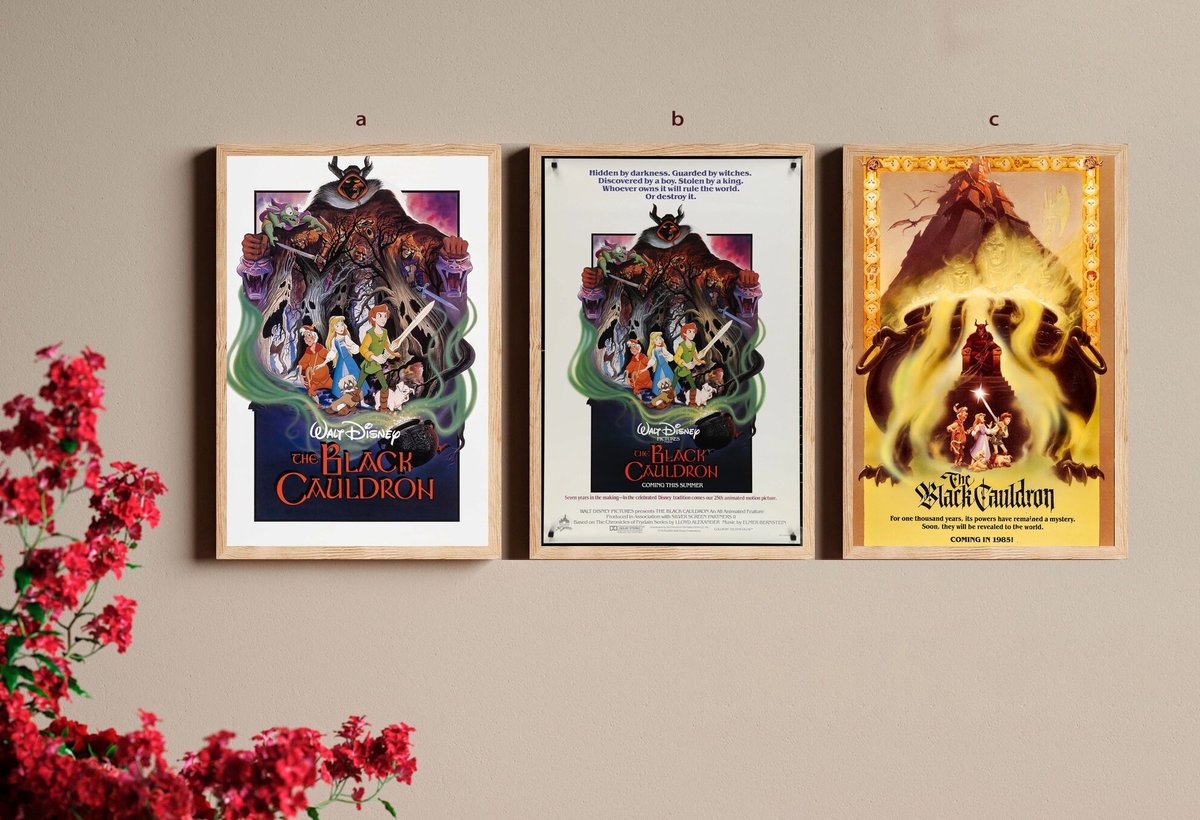
The world of Prydain, conjured by Lloyd Alexander, holds a special, often haunting, place in the hearts of fantasy readers. But for many, their first encounter with its dark magic and fledgling heroes came not from the pages, but from Disney's bold, and famously divisive, animated adaptation. Diving into The Black Cauldron Book vs. Film Comparison reveals a fascinating study in storytelling choices, where foundational elements are reinterpreted, characters take different paths, and the very soul of the narrative undergoes a significant transformation. It's not merely a question of "which is better," but "how are they different, and why does it matter?"
This isn't about declaring one definitive. Instead, it's an exploration of how a rich, multi-volume literary world translated to the big screen, uncovering the distinct experiences each offers and helping you decide which journey into Prydain is right for you—or perhaps, how to appreciate both for their unique merits.
At a Glance: Key Differences Between Book and Film
- Scope & Pacing: The film condenses two books ("The Book of Three" and "The Black Cauldron") into a single, faster-paced adventure. The books are a five-volume epic with slow-burn character development.
- Taran's Character Arc: Book Taran undergoes a gradual, humble maturation across five novels. Film Taran is a more conventional, eager-to-be-hero, with a much more accelerated, less nuanced development.
- Eilonwy's Role: In the books, Eilonwy is a sharp-witted, capable sorceress. The film softens her agency, positioning her more as a damsel-in-distress or a romantic interest.
- The Horned King: He's a powerful, tangible, visual antagonist in the film. In the books, he appears in "The Book of Three" as a fearsome, but ultimately secondary, villain, with the true evil of Prydain being the more systemic, ancient force of Arawn.
- Tone & Themes: The books are mystical, folkloric, and introspective, exploring moral dilemmas with lyrical prose. The film leans into eerie animation, spooky visuals, and a more conventional, albeit dark, adventure plot.
- Narrative Focus: Books explore political nuances, philosophical questions, and the burden of destiny. The film prioritizes a clear quest, visual spectacle, and horror elements.
The Genesis Story: From Pages to Pixacy
Lloyd Alexander's "The Chronicles of Prydain" series (1964-1968) introduced readers to a world deeply steeped in Welsh mythology, following the journey of Taran, an Assistant Pig-Keeper, who dreams of glory. The series, comprising "The Book of Three," "The Black Cauldron," "The Castle of Llyr," "Taran Wanderer," and "The High King," is a masterclass in introspective fantasy, lauded for its character depth, moral complexity, and beautiful prose.
Disney's "The Black Cauldron" (1985) was an ambitious undertaking. Intended to be the studio's first animated film with a PG rating, it aimed for a darker, more mature tone than its predecessors. Drawing primarily from the first two books, the production was plagued by challenges, including budget overruns, internal struggles, and a final cut that saw significant edits to reduce its intensity. The result was a film that, while visually striking and often praised for its unique atmosphere, struggled to find its audience and critical acclaim upon release.
This backstory is crucial because it highlights the fundamental challenge of adapting a sprawling, nuanced literary work for a different medium, especially within the constraints of a major studio aiming for commercial success.
A Tale of Two Tarans: The Hero's Journey Compressed
Perhaps no character embodies the divergence between book and film more profoundly than Taran, the protagonist.
In the Books: Taran begins as a naive, impulsive Assistant Pig-Keeper, desperately wishing for adventure and glory. His journey across five books is a long, arduous process of self-discovery. He makes mistakes, faces crushing defeats, experiences loss, learns humility, and gradually understands that true heroism isn't about wielding a sword or chasing fame, but about self-sacrifice, compassion, and taking responsibility. His arc is a profound exploration of identity and the difficult path to wisdom, often involving quiet contemplation and hard-won lessons rather than grand battles. He's a "warts and all" character, making him incredibly relatable and his growth deeply earned.
In the Film: The cinematic Taran, constrained by a single film's runtime, is necessarily streamlined. He's still an Assistant Pig-Keeper dreaming of glory, but his development is much faster and less complex. He embodies a more traditional animated hero archetype: eager, a little clumsy, but ultimately good-hearted and brave. The film focuses on his immediate quest and his desire to prove himself, without the deep philosophical introspection or the years of slow, sometimes painful, growth that define his literary counterpart. He often feels like a younger, less experienced version of the character, whose journey is just beginning, rather than nearing its spiritual conclusion.
This compression means much of the book's emotional depth and the gradual understanding of what it means to be a leader are lost. The film aims for a quicker emotional payoff, while the books demand patience, rewarding readers with a truly earned transformation.
Prydain's Denizens: Familiar Faces, Different Fates
The supporting cast, while recognizable, also undergoes significant reinterpretation.
Princess Eilonwy:
In Alexander's books, Princess Eilonwy is a vibrant, strong-willed, and highly capable character. She's a sharp-tongued enchantress with her own magical bauble (the bauble), intelligent and fiercely independent. Her wit often provides crucial insight, and her bravery is as potent as Taran's. She's his equal, a fellow traveler on the path to self-discovery, and far from a typical damsel.
The film, however, significantly alters her portrayal. She retains some of her spunk, but her magical abilities are downplayed, and her overall agency is reduced. The cinematic Eilonwy tends to be more of a companion and, at times, a captive in need of rescue, leaning into a more traditional princess role for a romantic subplot. This shift diminishes her unique contribution to the story and her powerful example of female strength in fantasy.
Gurgi:
Gurgi, the shaggy, apple-loving creature, is a delightful presence in both versions. In the books, he serves as Taran's loyal companion, offering comic relief but also surprising moments of bravery, wisdom, and profound loyalty. His internal struggle with his own cowardice and his ultimate act of self-sacrifice are deeply moving and central to the thematic core of "The Black Cauldron" novel.
The film amplifies Gurgi's role for comic relief, making him more overtly cuddly and child-friendly. While his loyalty and eventual sacrifice remain, the deeper nuances of his character—his inner conflict, his more animalistic instincts, and his gradual evolution—are simplified. He becomes more of a sidekick whose primary function is humor and emotional warmth.
Fflewddur Fflam:
The minstrel with the magically breaking harp is another character who translates fairly well, retaining his exaggerated tales and moments of unexpected courage. The film captures his essential charm and his endearing flaw of stretching the truth. His role is largely consistent, providing a grounding element of humor and practical (if often reluctant) assistance.
The Horned King:
Here, the film makes one of its most significant departures. In "The Book of Three," the Horned King is a terrifying but mortal warlord, defeated relatively early in Taran's journey. He serves as an immediate, concrete threat, but he is not the ultimate antagonist of the Prydain chronicles.
Disney's "The Black Cauldron" elevates the Horned King to the primary, overarching villain. He becomes a skeletal, immensely powerful sorcerer, a truly gothic and chilling figure. His gaunt appearance, booming voice, and singular obsession with the Black Cauldron make him an iconic, visually compelling antagonist. This change provides the film with a clear, singular force of evil to overcome, simplifying the more complex and systemic nature of evil represented by Arawn Death-Lord in the books.
Tone and Themes: Whimsical Folklore vs. Eerie Spectacle
The atmospheric differences between the books and the film are perhaps the most striking.
The Books: Alexander's "The Chronicles of Prydain" are imbued with a mystical, folkloric tone, heavily inspired by the Mabinogion and other Welsh myths. The prose is lyrical and often meditative, inviting readers to reflect on themes of duty, loss, identity, and the nature of good and evil. While there are moments of peril and sadness, the overall feeling is one of hopeful introspection, a quiet magic woven into the fabric of the world. Moral dilemmas are explored with subtlety, and the consequences of actions carry real weight, often leading to poignant, bittersweet conclusions rather than triumphant ones.
The Film: Disney's "The Black Cauldron" embraces a darker, more overtly eerie tone, leaning heavily into gothic fantasy and horror elements. The animation is moody, with stark shadows and unsettling character designs (especially the Horned King and his Gwythaints). The focus shifts from quiet introspection to spooky visuals and a faster-paced, more conventional adventure narrative. While it maintains a sense of wonder, it's often a dark, foreboding wonder, designed to evoke suspense and fear. This makes it a unique entry in the Disney canon, but it moves away from the nuanced, philosophical feel of the novels.
Plot Points & Pacing: Epic Saga vs. Streamlined Quest
Condensing a multi-volume series into a single 80-minute film is an immense challenge, and "The Black Cauldron" film makes drastic narrative choices.
Book Narrative: The series builds slowly, allowing Taran's world to expand organically. "The Book of Three" introduces the main characters and their initial quest. "The Black Cauldron" delves into the search for the powerful artifact and its potential for resurrection and destruction, but it also introduces political intrigue, betrayals, and ethical quandaries about war and sacrifice. Subsequent books continue Taran's wanderings, his search for identity, and the growing threat of Arawn. Each book has distinct adventures and character developments, contributing to a grand, unfolding tapestry.
Film Narrative: The film takes key elements from "The Book of Three" (the escape from the Horned King, meeting Eilonwy and Fflewddur) and "The Black Cauldron" (the quest for the cauldron, the defeat of the Horned King), and weaves them into a single, straightforward quest narrative. The main goal is clear: prevent the Horned King from using the Black Cauldron to raise an army of undead "Cauldron-Born." This streamlines the plot considerably, cutting out numerous subplots, political complexities, and side characters integral to the books. The pacing is much faster, driven by a clear antagonist and a ticking clock, sacrificing the more leisurely exploration of Prydain and its inhabitants.
This structural change fundamentally alters the experience. The books offer a deep dive into a fully realized world, while the film provides a visually striking, condensed adventure that feels both epic and hurried.
The Horned King: A Different Kind of Villainy
The nature of evil itself is reimagined.
In the Books: The true antagonist of Prydain is Arawn Death-Lord, the malevolent ruler of Annuvin. He is a distant, ancient evil, whose influence permeates the land. The Horned King is merely one of his warlords. The books explore the concept of evil not just as a singular, mustache-twirling villain, but as a systemic force, a corruption that can tempt even good people and requires moral strength and sacrifice to overcome. There are nuances to villainy, and the struggle is often internal as much as external.
In the Film: The Horned King becomes the concrete, singular embodiment of evil. He is a truly frightening visual presence, his goal clear: raise the Cauldron-Born and conquer Prydain. This makes for a more focused conflict, easier to digest in a film format. By making him the ultimate antagonist, the film establishes a clear hero-vs-villain dynamic, suitable for a fantasy adventure movie. While effective for its medium, it loses the broader, more insidious threat of Arawn and the deeper philosophical exploration of evil that characterizes the novels.
The Cauldron's True Nature: Mythic Object vs. Plot Device
The titular Black Cauldron itself also serves different functions.
In the Books: The Black Cauldron is a powerful, ancient artifact, but its true significance is not just its power to raise the dead. It is a symbol of great evil, capable of corrupting those who wield it. The ethical dilemma of its use, and the sacrifice required to destroy it, are central to the novel "The Black Cauldron." It's not just a weapon; it's a moral crucible.
In the Film: The Black Cauldron is primarily a plot device. Its function is to raise the Cauldron-Born, and the quest revolves around preventing the Horned King from achieving this. While its power is immense, the film doesn't delve deeply into the moral implications or the weight of its history in the same way the books do. It serves as the MacGuffin that drives the narrative and provides the climactic confrontation.
Why the Discrepancy? Understanding the Adaptation Process
Understanding why these differences exist is key to appreciating both versions.
- Medium Conversion: Books allow for internal monologue, sprawling world-building, and slow-burn character arcs. Film demands visual storytelling, tighter pacing, and a more immediate emotional impact. What works on the page doesn't always translate directly to the screen.
- Target Audience: While Alexander's books are for young adults, their depth appeals to all ages. Disney, in the 1980s, was primarily known for family-friendly animation. Though "The Black Cauldron" pushed boundaries, there were still commercial pressures to make it accessible and entertaining within a certain framework.
- Creative Interpretation: Directors and screenwriters bring their own vision. The decision to make the Horned King the primary villain and amplify the gothic elements was a creative choice to establish a distinct tone for the film.
- Practical Constraints: Budget, runtime, and animation technology all play a role. Adapting five books with their myriad characters and locations would have been an impossible task for a single film. Compression was inevitable.
Which to Experience First? A Guide for Newcomers
If you're new to Prydain, the question of where to start is valid.
- For Deep Character Arcs and Philosophical Depth: Read the Books First. If you value slow-burn storytelling, rich internal lives, nuanced morality, and a profound sense of mythological wonder, begin with "The Book of Three." You'll gain a deeper appreciation for Taran's journey and the intricate world Alexander crafted. The film, if watched afterward, can then be seen as a visually striking, albeit simplified, interpretation.
- For Eerie Visuals and a Compact Adventure: Watch the Film First (with caveats). If you prefer immediate action, striking animation, and a darker, more straightforward fantasy quest, the film might be a good entry point. However, be aware that it only scratches the surface of Prydain. If you enjoy the film's atmosphere, then diving into the books afterward will reveal a vastly expanded and deeper narrative, almost like a "director's cut" of the world.
Addressing Common Misconceptions
It's easy to fall into traps when comparing adaptations. Let's clear up a few.
- "The movie is 'bad' because it's different." This is a subjective judgment. The film isn't bad because it diverges; it's different because it's a different medium with different goals. While it might not capture the full essence of the books, it offers a distinct, often haunting, visual experience that stands on its own merits as a dark fantasy film. Its artistic direction, particularly the Horned King, is still celebrated by many.
- "The books are too 'childish' for adults." Absolutely not. While suitable for younger readers, "The Chronicles of Prydain" tackle universal themes of identity, sacrifice, and the nature of power with a maturity and depth that resonates deeply with adults. They are often compared favorably to other foundational fantasy series.
- "The film ruins the books." A common fear with adaptations. The film doesn't diminish the books' quality or existence. The novels remain a complete, powerful work regardless of how their cinematic counterpart is received. Think of them as parallel universes: connected by core ideas but distinct in their unfolding.
Beyond the Comparison: The Enduring Legacy of Prydain
Both Lloyd Alexander's "The Chronicles of Prydain" and Disney's "The Black Cauldron" film have carved out their own legacies. The books continue to be celebrated as a cornerstone of fantasy literature, influencing countless authors and readers with their timeless wisdom and beautifully crafted world. They remind us that the greatest adventures often begin with the most unlikely heroes and that true strength lies in humility and compassion.
The film, despite its initial struggles, has garnered a cult following. Its unique, dark aesthetic, memorable villain, and bold departure from traditional Disney fare have resonated with audiences who appreciate its strange, haunting charm. It stands as a fascinating artifact in animation history, a testament to pushing creative boundaries and daring to be different.
Ultimately, the choice to engage with either the books or the film, or both, is a personal one. Each offers a distinct journey into the world of Prydain, full of magic, peril, and profound questions. Appreciating their differences allows for a richer understanding of storytelling itself, and a deeper love for the enduring tales of Taran, the Assistant Pig-Keeper, and his quest for truth and identity.